Frailty, not age alone, should guide breast cancer care for older women
☕ Includes a question for the family ↓
FrailtyPart of a story we are following · 5 articles · See every update
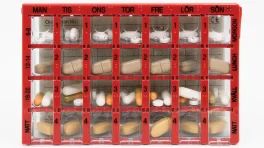
If you or someone you love is an older woman with breast cancer, here is a useful idea: a birthday number should not make the treatment choice. Doctors are being encouraged to look at how strong the person is, a quality called frailty, and at the tumor itself.
In a review of earlier studies covering 22,821 patients with a median age of about 83, women treated with hormone-blocking pills alone did not have a statistically significant difference in overall survival compared with women who had surgery first. The authors say this supports weighing frailty and tumor biology, not age alone.
How the study worked
Researchers combined results from earlier studies: 6 randomized trials and 23 observational studies. All looked at women with operable breast cancer that had not spread and that was estrogen receptor-positive (ER-positive, meaning hormones help it grow). The work was published on November 2, 2026 in JAMA Network Open. The studies were done over about five decades and differed in how they were designed, so the observational results were described rather than directly compared.
What they found
The patients in the review had a median age of 83.1 years. The main question was whether women live as long with hormone-blocking pills alone (called primary endocrine therapy) as with surgery. In the randomized trials, there was no statistically significant difference in overall survival. The numbers leaned slightly toward surgery (a hazard ratio of 1.14), but the gap was small enough that it could be down to chance.
The pills did not work for the same length of time in every group. In older studies that did not pick patients by tumor type and used the drug tamoxifen, the cancer took a median of 19.7 months to start growing again. In studies that chose ER-positive tumors and used newer drugs called aromatase inhibitors, that stretch was more than 50 months.
In plain terms: the pills held the cancer in check longest for women whose tumors had favorable biology. Tumor biology was consistently linked to how soon the cancer progressed.
What does frailty mean?
Frailty is not the same as being old. It describes how much reserve your body has: your strength, energy, daily independence and how well you bounce back from stress, such as an operation. Two women of the same age can be very different. One may walk daily and live on her own. The other may have several health conditions and tire easily. Doctors can use that difference, together with the tumor’s features, to find the best match.
What you can do today
Write down a short “strength snapshot” for yourself or your loved one: can she walk a block, climb stairs, handle daily tasks on her own, and how has her energy been lately? Bring that page to the next appointment and ask the care team how the tumor’s features and these everyday abilities fit into the treatment plan.
Talk about it at home
Think of a tumor like a weed in a garden. Some weeds grow fast and need to be pulled right away, while others grow slowly and can be kept in check. Scientists gathered many past studies together to see which plan works best for which kind of weed and which gardener.
Try it at home
Myth or fact: older people should always get the same treatment as everyone else, because age is the most important thing about a person.
Keep exploring
Copies this article and its questions so you can paste them into ChatGPT, Claude, Gemini or the AI you use, and keep the conversation going.
Questions and answers
- Did hormone pills work as well as surgery?
- In the randomized trials, there was no statistically significant difference in overall survival between hormone pills alone and surgery first.
- What is primary endocrine therapy?
- It is treatment with hormone-blocking pills, such as tamoxifen or aromatase inhibitors, used instead of surgery as the first step for ER-positive breast cancer.
- What is frailty?
- Frailty describes how much physical reserve a person has, including strength, energy and independence. It is different from age.
- Who studied this?
- The researchers combined earlier studies with 22,821 patients, published in JAMA Network Open on November 2, 2026.