More ultra-processed food was linked to a higher risk of some blood cancers
Food and cancerPart of a story we are following · 1 article · See every update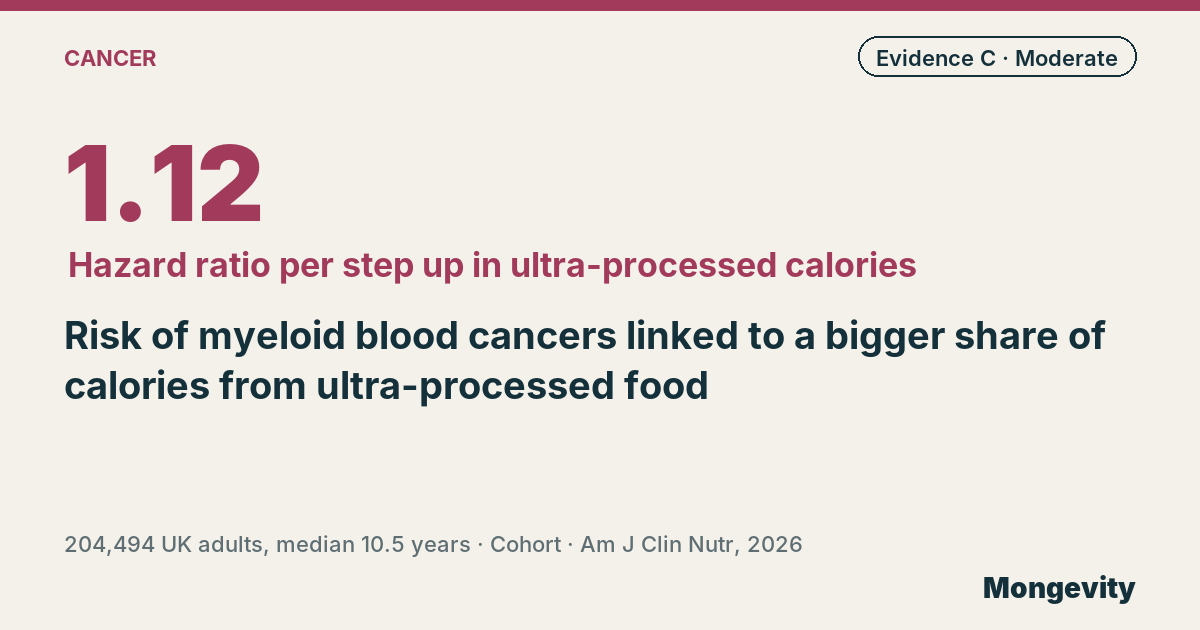
Each step up in the share of calories from ultra-processed food was linked to a 1.12 hazard ratio for myeloid blood cancers over a median 10.5 years in 204,494 UK Biobank adults, in a study published Oct. 26, 2026, in American Journal of Clinical Nutrition. It adds to evidence linking diet and cancer.
Ultra-processed foods, like packaged snacks, sugary drinks, ready meals and processed meats, have been linked to obesity, heart disease and several cancers.
People who got more of their calories from ultra-processed food had a higher risk of developing these blood cancers.
What are myeloid neoplasms?
They’re cancers of the cells in the bone marrow that make red cells, platelets and some white cells. They include myeloproliferative neoplasms (MPN), myelodysplastic syndromes and some leukemias. They’re more common with age.
What did the study look at?
Researchers followed 204,494 UK Biobank participants who had filled out detailed online food questionnaires. They estimated what share of each person’s calories came from ultra-processed food and tracked hospital-recorded myeloid neoplasms over a median of 10.5 years, adjusting for factors like age, income, activity, body size and the rest of the diet.
What did the study find about diet and cancer?
848 people developed a myeloid neoplasm. Each one-standard-deviation increase in the share of calories from ultra-processed food was linked to a hazard ratio of 1.12. The clearest link was with myeloproliferative neoplasms (hazard ratio 1.15). The association held in people without CHIP, an age-related change in blood cells that raises the risk of these cancers (hazard ratio 1.10). Blood markers pointed to links with fats, inflammation and immune cells.
Why does this matter?
It adds blood cancers to the list of conditions associated with heavily processed diets, and suggests inflammation may be part of the story. It also shows the link isn’t explained just by a pre-existing blood change.
How solid is this evidence?
It’s moderate. Mongevity rates it C on our A-to-E scale. The study is large and long, but observational: people who eat more ultra-processed food may differ in many ways. Diet was self-reported, cases came from hospital records, and the authors note the molecular findings don’t prove a cause.
What does this mean for you?
The risk increase is modest, and these cancers are uncommon. Still, cutting back on ultra-processed foods is already recommended for heart and metabolic health, and this study gives one more reason. Small swaps, like cooking at home more often or choosing whole foods, add up.
How do I explain this at dinner?
Scientists looked at what hundreds of thousands of people ate and found that those who ate more factory-made, packaged food were a bit more likely to get certain blood cancers years later. A good question for the table: what packaged food could we swap for something homemade this week?
In one sentence: eating more ultra-processed food was linked to a higher risk of myeloid blood cancers in a large UK study, though it doesn’t prove cause.
Questions and answers
- Does ultra-processed food cause blood cancer?
- This study shows an association, not cause: each step up in ultra-processed calories was linked to a hazard ratio of 1.12 for myeloid neoplasms.
- Which blood cancers were most linked?
- Myeloproliferative neoplasms showed the clearest link (hazard ratio 1.15).
- How big is the risk?
- The increase is modest, and these cancers are uncommon: 848 cases among 204,494 people over a median 10.5 years.