Simple pop-up prompts got people to flag cancer misinformation instead of liking it
Cancer and inequalityPart of a story we are following · 3 articles · See every update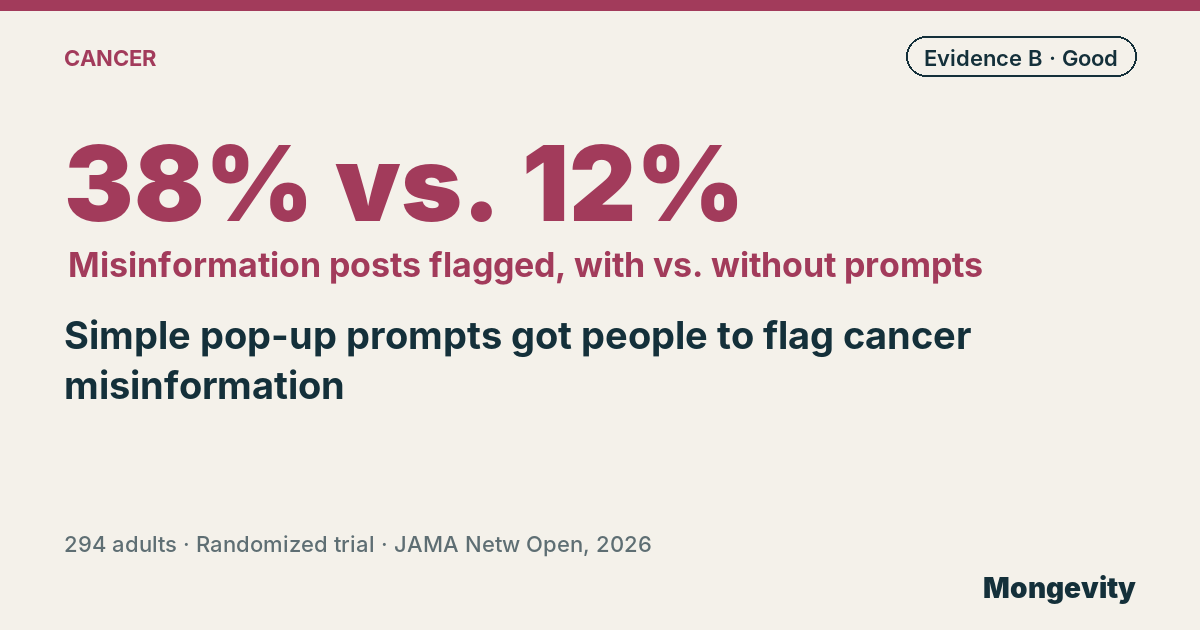
People with cancer or caring for someone with cancer flagged misleading treatment posts far more often when posts carried prompts, 38% with social-cue prompts vs. 12% without, in a US randomized trial published Oct. 1, 2026, in JAMA Network Open. Misinformation can deepen cancer and inequality, and simple tools can help.
False claims about cancer treatments spread easily on social media, from miracle diets to dangerous alternatives to proven therapy. People with cancer and their caregivers are especially exposed.
What did the trial test?
294 US adults aged 18 to 65 who had cancer or were caring for someone with cancer used a realistic simulated social media platform. They saw posts with false cancer treatment claims. They were assigned by chance to see the posts with prompts that mentioned what other users had done plus a review policy (88 people), with standard prompts (92), or with no prompts (114).
What did the study find about cancer and inequality?
| Misinformation posts | Social-cue prompts | Standard prompts | No prompts |
|---|---|---|---|
| Flagged | 38% | 26% | 12% |
| Liked | 3% | 1% | 10% |
Compared with no prompts, posts were flagged 2 to 3 times more often: rate ratios were 3.12 for social-cue prompts and 2.15 for standard prompts. Prompts also made people more willing to flag and dislike posts and less willing to like and share them. Standard prompts even led to more flagging on participants’ real social media accounts.
Why does this matter?
Platforms rely on users to report harmful content, but most people scroll past. This trial shows that small, low-cost design choices can nudge people to act responsibly, which could slow the spread of dangerous cancer claims.
How solid is this evidence?
It’s good. Mongevity rates it B on our A-to-E scale: a registered randomized trial. Limits: it used a simulated platform for a short period, participants were recruited online and knew they were in a study, and real-world platforms may behave differently.
What are the open questions?
It’s unclear whether these effects last over time on real platforms and whether they reduce how many people actually believe or act on false claims.
What does this mean for you?
Before sharing a health claim, check the source: is it from a cancer center, a medical society or a reputable news outlet? If a post promises a cure without evidence, report it rather than engaging. Bring questions about treatments you see online to your oncology team.
How do I explain this at dinner?
On a test social media site, people saw fake cancer cures. When posts carried a small message nudging them to report it, they flagged the posts 2 to 3 times more often and liked them less. A good question for the table: what makes you trust a health post?
In one sentence: simple prompts on social media posts made people flag cancer misinformation more and share it less in a randomized trial.
Questions and answers
- What did the prompts do?
- They made people flag misleading cancer posts more and like them less.
- How much more flagging?
- 38% of posts with social-cue prompts were flagged vs. 12% without prompts.
- What should I do with a suspicious health post?
- Check the source, report it if it's misleading and ask your medical team.