Lymphoma of the skin: newer targeted and immune drugs worked in 34% to 69% of patients
LymphomaPart of a story we are following · 2 articles · See every update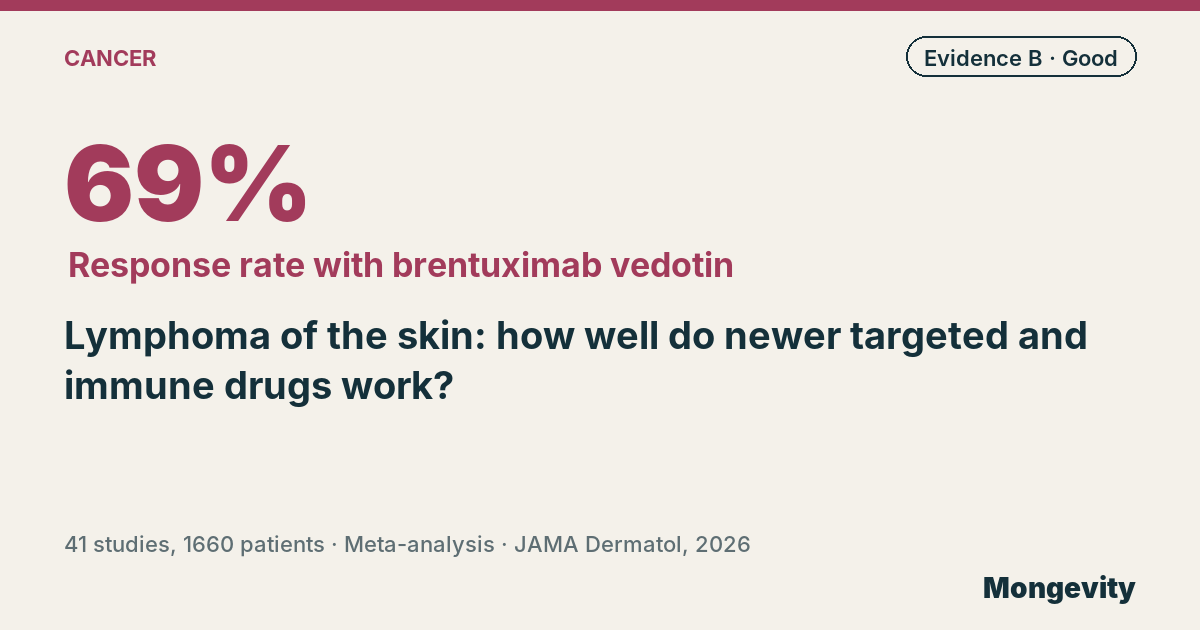
Response rates to targeted and immune-based drugs for cutaneous T-cell lymphoma ranged widely, led by brentuximab vedotin at 69%, in a meta-analysis of 41 studies published Oct. 28, 2026, in JAMA Dermatology. It helps compare options for this lymphoma of the skin.
Cutaneous T-cell lymphomas are cancers of immune cells, called T cells, that settle in the skin. The most common forms are mycosis fungoides and Sézary syndrome. Early disease can look like a stubborn rash for years; advanced disease causes widespread skin lesions, itching and infections, and has few lasting treatments. Several targeted and immune-based drugs have appeared, but they had never been compared side by side.
What did the study do?
Researchers searched three major databases up to April 10, 2026, for studies of targeted or immune-based drugs used alone in cutaneous T-cell lymphoma. They included 41 studies with 1660 patients, whose mean age was 61.6 years, and combined the results to estimate the share of patients whose disease responded to each drug.
What did the study find about lymphoma?
Response rates ranged from 38% to 66% in mycosis fungoides and from 60% to 74% in Sézary syndrome. Responses lasted a median of 4.7 to 9.4 months, depending on the drug, and median time without progression ranged from 14.4 to 23.3 months. Serious side effects ranged from 15% with mogamulizumab to 26% with denileukin diftitox.
Why does this matter?
People with advanced cutaneous T-cell lymphoma often go through several treatments. Seeing how each drug performs on response, durability and side effects, and how results differ between mycosis fungoides and Sézary syndrome, helps doctors and patients choose and plan the sequence.
How solid is this evidence?
It’s good. Mongevity rates it B on our A-to-E scale: a systematic review with a formal meta-analysis. Limits: many included studies were small and not randomized, some estimates are imprecise, such as interferon alfa and pembrolizumab with few patients, and drugs were compared across different studies, not head to head.
What does this mean for you?
If you have a skin rash that doesn’t heal despite treatment for months, ask your doctor whether a skin biopsy is needed. If you or someone close to you has cutaneous T-cell lymphoma, ask the specialist which subtype it is and how expected response, duration and side effects compare among the options.
How do I explain this at dinner?
There’s a kind of lymphoma that lives in the skin and can look like a rash that won’t go away. Researchers pooled 41 studies and found that newer drugs help many patients, but some work better, or longer, than others. A good question for the table: why might the same drug work differently in two forms of the same cancer?
In one sentence: targeted and immune-based drugs help many people with cutaneous T-cell lymphoma, but response, durability and side effects differ, so the choice should fit the subtype.
Questions and answers
- What is cutaneous T-cell lymphoma?
- A cancer of T cells that settles in the skin; the main forms are mycosis fungoides and Sézary syndrome.
- Which drug had the highest response?
- Brentuximab vedotin, with a pooled response rate of 69%.
- How long do responses last?
- A median of 4.7 to 9.4 months, depending on the drug.