People who have been in prison had worse cancer survival, a study in two US states finds
Cancer and inequalityPart of a story we are following · 3 articles · See every update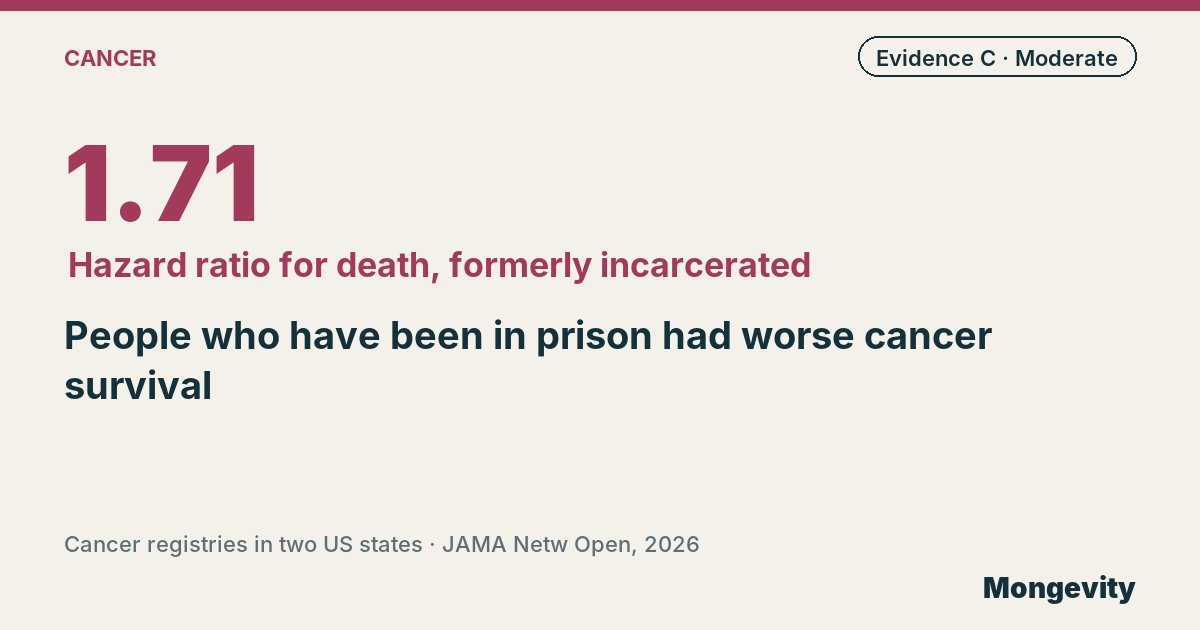
Formerly incarcerated people had worse cancer survival than people never incarcerated (hazard ratio 1.71), in a study of cancer registries in California and Massachusetts published Oct. 1, 2026, in JAMA Network Open. The gap shows how cancer and inequality are tied.
Cancer is the leading cause of death in US prisons. People in prison and after release often face barriers to screening and care.
What did the study do?
Researchers linked state prison records with cancer registries in California and Massachusetts for cancers diagnosed between 2010 and 2019. They compared cancer types, stage at diagnosis and survival among people never incarcerated, currently incarcerated and formerly incarcerated at the time of diagnosis.
What did the study find about cancer and inequality?
- Currently incarcerated patients were more likely to have cervical cancer (standardized incidence ratio 3.57) and liver cancer (3.10).
- In Massachusetts, currently and formerly incarcerated patients were more likely to be diagnosed at an advanced stage with cancers that screening can catch.
- People in prison were diagnosed younger: median age 57 vs. 66 years for never-incarcerated patients.
After adjusting for age, cancer type and other factors, formerly incarcerated patients had worse survival (hazard ratio 1.71), and so did currently incarcerated patients, with differences by state.
Why does this matter?
The higher rates of cervical and liver cancer point to preventable causes, such as HPV and hepatitis infections. Late diagnoses point to gaps in screening. These are concrete targets for cancer control in prisons and after release.
How solid is this evidence?
It’s moderate. Mongevity rates it C on our A-to-E scale: a large registry study across two states, but observational, with limited data on factors such as income, insurance, smoking or treatment received.
What are the open questions?
Researchers need to understand which parts of the gap come from care in prison, care after release or conditions before incarceration, and which interventions close it.
What does this mean for you?
If you or someone you know has been incarcerated, catching up on cancer screening, such as cervical, colon and, when relevant, lung and liver checks, and getting HPV and hepatitis B vaccines and hepatitis C testing can make a difference.
How do I explain this at dinner?
People who have been in prison get some preventable cancers more often, are diagnosed later and survive less. Better screening, vaccines and follow-up care could change that. A good question for the table: who falls through the cracks in health care?
In one sentence: people currently or formerly incarcerated had more preventable cancers, later diagnoses and worse survival, identifying clear targets for cancer control.
Questions and answers
- Which cancers were more common in prison?
- Cervical cancer (incidence ratio 3.57) and liver cancer (3.10).
- How did survival compare?
- Five-year survival was 51.8% for formerly incarcerated vs. 62.4% for never-incarcerated patients.
- What could help?
- Better screening, HPV and hepatitis vaccines, hepatitis testing and follow-up care after release.