Mindfulness, a mental health tool, shifted brain responses in opioid addiction
Stress and the mindPart of a story we are following · 4 articles · See every update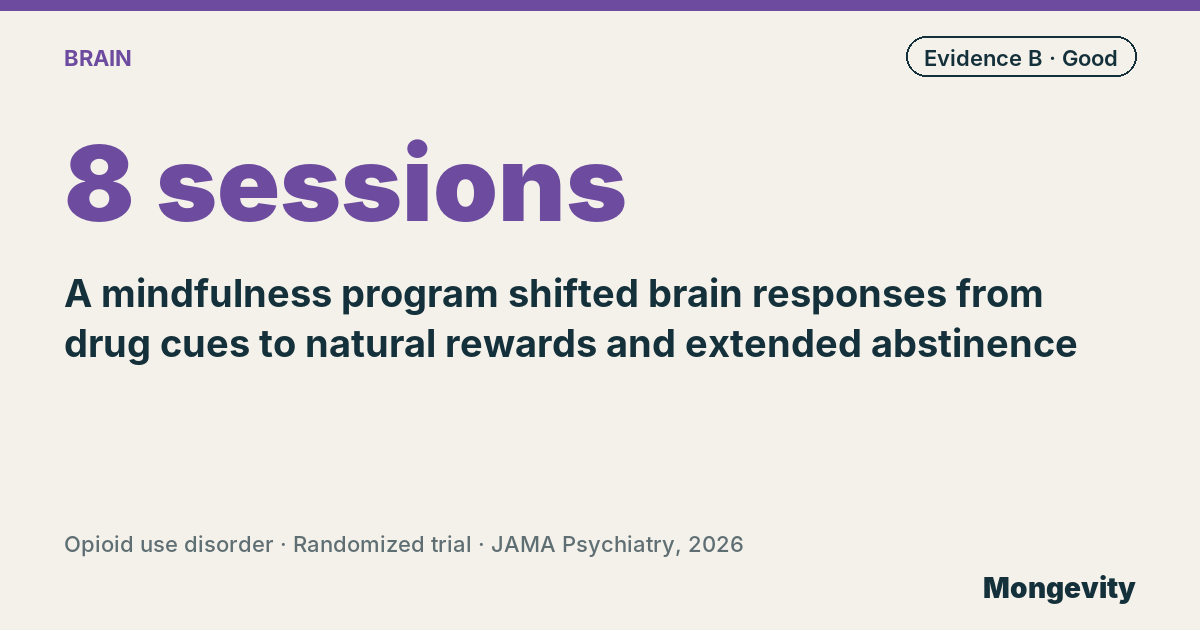
A mindfulness program for opioid use disorder shifted brain activity away from drug cues toward natural rewards, reduced craving and extended abstinence compared with supportive therapy, in a randomized trial published Oct. 28, 2026, in JAMA Psychiatry. Mindfulness may be a useful tool for stress and mental health in addiction.
Medications for opioid use disorder save lives, but overdose deaths remain high, and many people struggle with craving.
People who took the program showed changes in the front of the brain that were linked to less craving, and they stayed abstinent longer.
What is MORE?
Mindfulness-Oriented Recovery Enhancement (MORE) combines three skills: mindfulness, learning to rethink reactions to drug cues, and savoring positive everyday experiences. It’s taught in 8 weekly group sessions of 2 hours.
What did the trial test?
People with opioid use disorder at an inpatient rehabilitation center in New York were assigned by chance to MORE or to a supportive therapy group used as an active comparison. Brain scans (fMRI) measured responses to drug cues and to natural rewards like pleasant images. The main drug cue analysis included 59 participants.
What did the study find about stress and mental health?
Compared with supportive therapy, MORE:
- Reduced drug-biased activity in the prefrontal cortex and other areas when people tried to dampen drug cravings and boost enjoyment of natural rewards.
- Linked the shift from drug to natural reward responses with lower cue-induced craving, only in the MORE group.
- Reduced synchrony in the medial prefrontal cortex while watching drug-related movie scenes.
- Extended abstinence at follow-up, about 4 months after treatment.
Why does this matter?
Addiction rewires how the brain values rewards. Showing that a behavioral program can shift those responses supports using it alongside medication, not as a replacement.
How solid is this evidence?
It’s good. Mongevity rates it B on our A-to-E scale. It was randomized with an active comparison. But the brain analyses included few people, many participants were men, it was one center, and brain changes are indirect measures.
What does this mean for you?
If you or someone close to you has opioid use disorder, medications remain the foundation of treatment. Programs that build skills like mindfulness may help with craving; ask the treatment team what’s available. If someone is in danger of overdose, call emergency services.
How do I explain this at dinner?
When people are addicted, their brain pays extra attention to the drug and less to everyday joys. A program that teaches paying attention on purpose helped their brains notice good things again. A good question for the table: what small thing made you happy today?
In one sentence: a mindfulness program shifted brain responses away from drug cues and extended abstinence in people with opioid use disorder.
Questions and answers
- What is Mindfulness-Oriented Recovery Enhancement?
- A group program that teaches mindfulness, rethinking reactions to drug cues and savoring positive experiences, in 8 weekly 2-hour sessions.
- Did it help people stay off opioids?
- It extended abstinence at follow-up, about 4 months after treatment, compared with supportive therapy.
- Does it replace medication?
- No. The authors see it as an add-on to medications for opioid use disorder.