Regenerative gum surgery saved most teeth in dogs with severe gum disease
Dental health in petsPart of a story we are following · 2 articles · See every update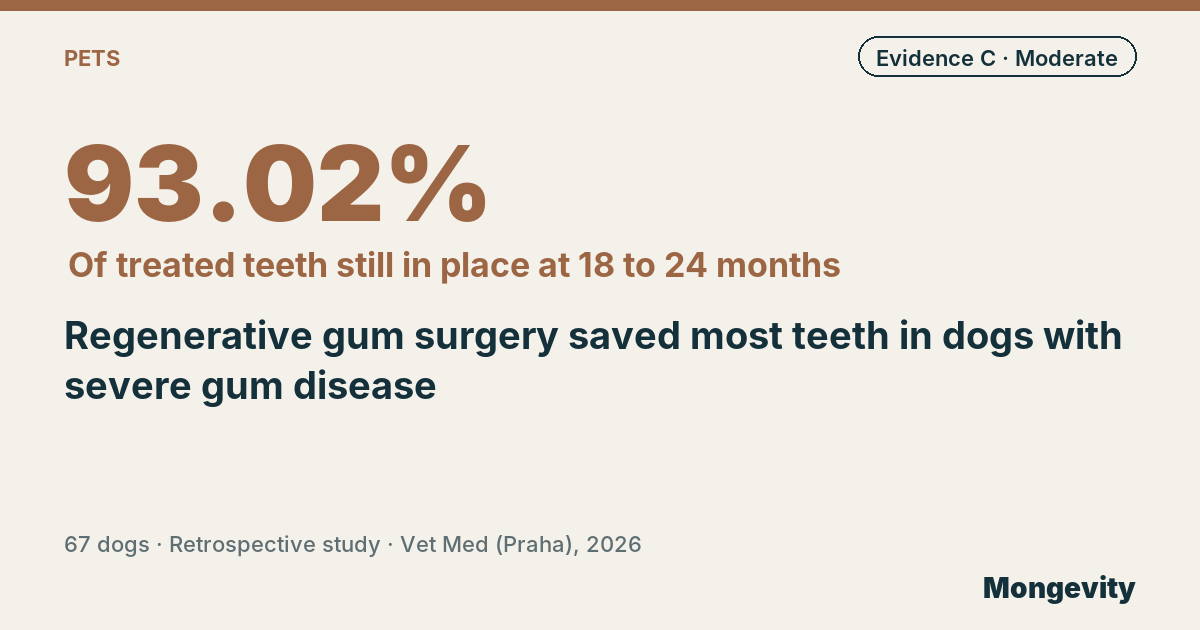
Guided tissue regeneration, a regenerative gum surgery, kept 93.02% of treated teeth at 18 to 24 months in 67 dogs with severe gum disease, in a retrospective study published Sept. 29, 2026, in Veterinarni Medicina. It is an option to protect dental health in dogs.
Periodontal disease, infection and inflammation of the gums and the structures that hold teeth in place, is one of the most common health problems in dogs, especially as they age. In severe cases, bone around the tooth is lost and the tooth is usually extracted. Guided tissue regeneration is a surgery that aims to regrow some of that support instead.
What did the study do?
Researchers reviewed the records of 67 dogs with 129 teeth or sites treated for severe periodontal defects. The surgery combined a regenerative material, either an enamel matrix derivative or a bone graft from cattle, with a collagen membrane, chosen for each case. They checked pocket depth, gum attachment, bone defect size on X-rays and whether the tooth survived.
What did the study find about dental health in dogs?
Clinical and X-ray measures improved significantly after surgery. Tooth survival was:
Data
| 3-5 months | 98.5% |
|---|---|
| 6-8 months | 97.7% |
| 10-13 months | 96.1% |
| 18-24 months | 93% |
Why does this matter?
Keeping a strategic tooth can help a dog chew comfortably. These results suggest regenerative surgery can be a tooth-saving option for selected dogs with severe defects.
How solid is this evidence?
It’s moderate. Mongevity rates it C on our A-to-E scale: a study of real cases with clear measurements, but retrospective, without a comparison group, and with incomplete and variable follow-up. The number of dogs checked fell over time, so long-term results should be read with caution, as the authors note.
What are the open questions?
Prospective studies with control groups and longer, complete follow-up are needed to know how this surgery compares with extraction or standard cleaning.
What does this mean for you?
Prevention is the best treatment: brush your dog’s teeth regularly with pet toothpaste, schedule dental checks and professional cleanings, and watch for bad breath, red gums, drooling or trouble chewing. If your dog has severe gum disease, ask a veterinary dentist whether saving a tooth is possible.
How do I explain this at dinner?
Dogs get gum disease that can loosen their teeth. Vets tried a surgery that helps rebuild the tooth’s support, and after up to two years most treated teeth were still in place, though the study had no comparison group. A good question for the table: who brushes the dog’s teeth at home?
In one sentence: guided tissue regeneration kept most treated teeth in dogs with severe periodontal disease, but stronger studies are needed.
Questions and answers
- What is guided tissue regeneration?
- A surgery that uses regenerative materials and a membrane to help rebuild the support around a tooth.
- Did it save teeth?
- 93.02% of treated teeth were still in place at 18 to 24 months.
- How can I prevent gum disease in my dog?
- Regular brushing with pet toothpaste, dental checks and professional cleanings.