A new immune drug shrank some tumors that had resisted immunotherapy
How immunotherapy worksPart of a story we are following · 2 articles · See every update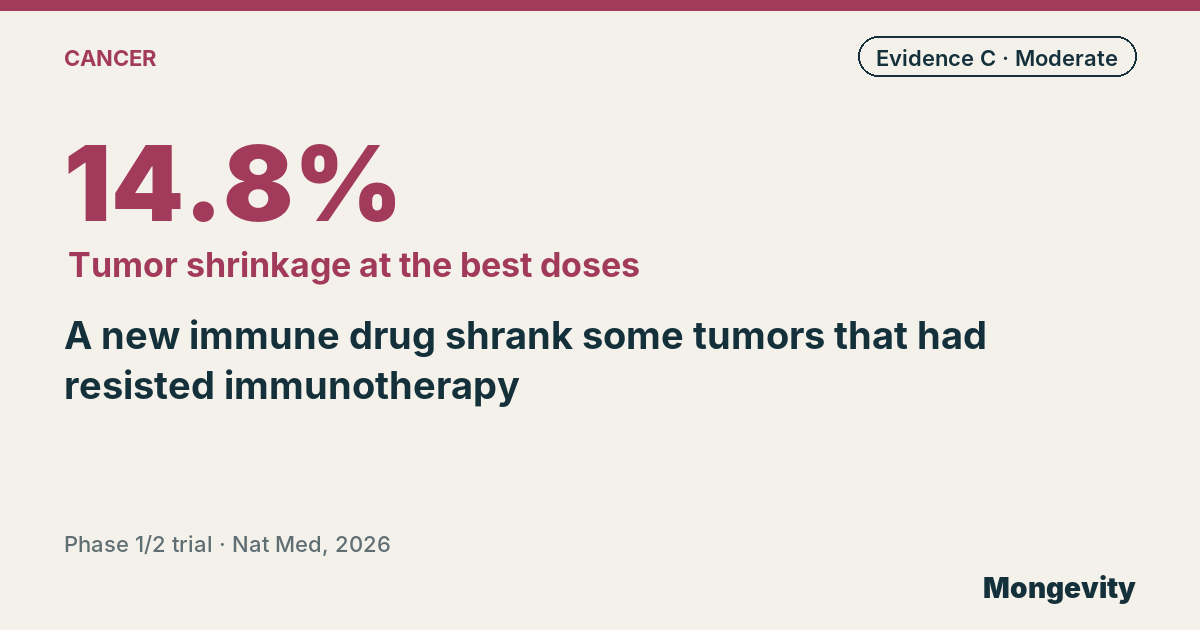
Invikafusp alfa, a drug that activates specific T cells, shrank tumors in 14.8% of patients at the best doses, including some ‘cold’ tumors that usually resist immunotherapy, in an early trial published Oct. 23, 2026, in Nature Medicine. It is a new approach to making immunotherapy work for more people.
Immune checkpoint inhibitors work by releasing brakes on the immune system, but many tumors don’t respond, especially “cold” tumors with few immune cells inside. Invikafusp alfa takes a different approach: instead of releasing brakes, it presses the accelerator on two specific subsets of T cells.
What did the trial test?
START-001 is a phase 1/2 trial. In phase 1, 34 patients with solid tumors received increasing doses to find a safe and effective one. Phase 2 then enrolled an initial 18 patients. Most participants had tumors that had resisted checkpoint inhibitors.
What did the study find about immunotherapy?
- The highest dose tested didn’t reach a maximum tolerated level. Two patients had reversible dose-limiting side effects.
- The most common side effect was cytokine release syndrome, an immune reaction causing fever and other symptoms, mostly mild to moderate.
- There were no treatment-related deaths.
- At the two best doses, 0.08 and 0.12 mg/kg, 14.8% of patients (4 of 27) had their tumors shrink, including people with microsatellite stable colorectal cancer and PD-L1-negative lung cancer, both usually resistant to immunotherapy.
- No responses were seen at lower doses.
- The drug expanded the targeted T cells in the blood and inside tumors.
The dose of 0.08 mg/kg was chosen for further testing.
Why does this matter?
Patients whose cancers no longer respond to immunotherapy have few options. A new mechanism that can shrink even some cold tumors is encouraging, though the response rate is still modest.
How solid is this evidence?
It’s limited. Mongevity rates it C on our A-to-E scale: an early trial designed mainly to test safety and dose, with a small number of patients, no comparison group and mixed tumor types. Response rates in early trials often fall in larger studies.
What are the open questions?
The ongoing phase 2 will show which tumor types respond best, how long responses last and whether the drug improves survival.
What does this mean for you?
If you or someone close to you has a cancer that stopped responding to immunotherapy, ask the oncologist about clinical trials, including early-phase ones, and what their risks and possible benefits are.
How do I explain this at dinner?
Some cancer drugs release the immune system’s brakes; this new one presses the gas pedal on a few specific T cells. In an early trial, it shrank tumors in some people whose cancers had ignored other immune drugs. A good question for the table: why might different immune drugs work in different people?
In one sentence: invikafusp alfa, a new T cell-activating drug, was acceptably safe and shrank some immunotherapy-resistant tumors in an early trial, supporting further testing.
Questions and answers
- What is invikafusp alfa?
- A bispecific antibody that activates two specific subsets of T cells to attack tumors.
- Did it work?
- At the best doses, 14.8% of patients had tumor shrinkage, including some immunotherapy-resistant tumors.
- Is it safe?
- Side effects were mostly mild to moderate immune reactions; there were no treatment-related deaths.