Poor sleep during chemo predicted ‘chemo brain’ complaints in women with breast cancer
Life after cancerPart of a story we are following · 3 articles · See every update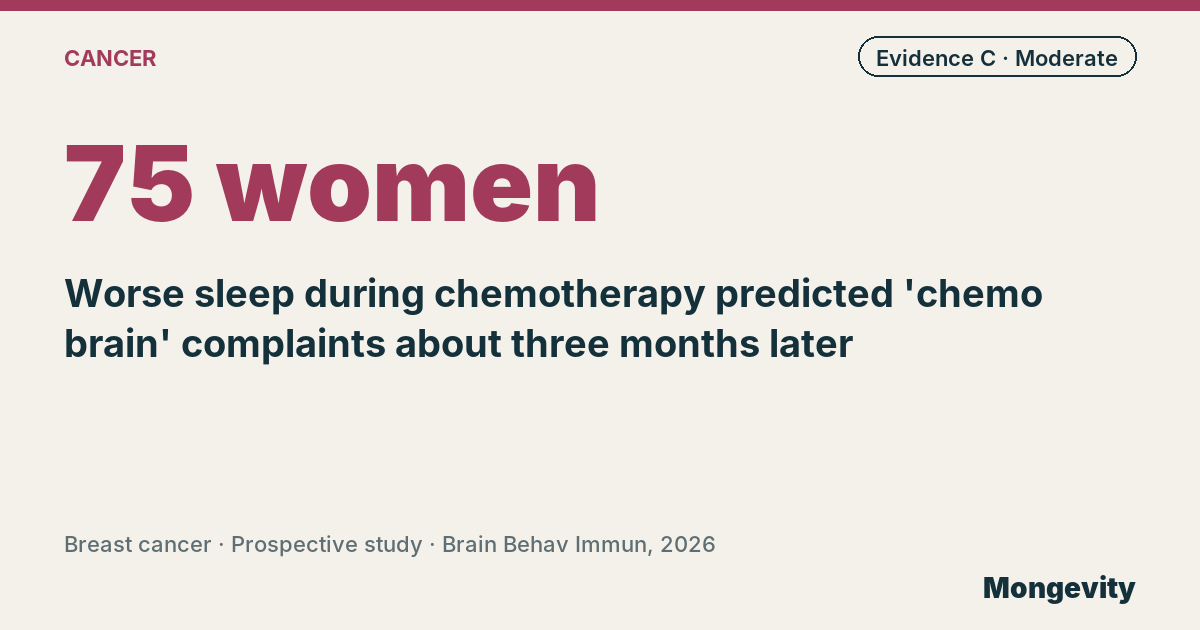
Worse sleep during chemotherapy predicted more self-reported thinking problems about three months later in 75 women with breast cancer, in a study published Oct. 26, 2026, in Brain, Behavior, and Immunity. Sleep may be a target for protecting life after cancer.
Many people treated with chemotherapy report trouble with memory and concentration, often called “chemo brain,” that can last for years. Sleep problems are also very common during treatment.
Worse sleep during chemotherapy predicted more self-reported thinking problems after treatment.
What did the study look at?
75 women with breast cancer gave blood samples to measure inflammatory markers (IL-6, TNFα, IL-1β and CRP), answered questionnaires about sleep and perceived thinking, and took objective cognitive tests. They were assessed before, during and about three months after chemotherapy.
What did the study find about life after cancer?
- Sleep problems increased during chemotherapy, along with IL-6, TNFα and IL-1β.
- More sleep problems during chemotherapy predicted worse self-reported thinking after treatment, but not worse scores on objective tests.
- Higher IL-1β during chemotherapy also predicted worse self-reported thinking.
- Contrary to what the researchers expected, sleep problems explained the link between IL-1β and later thinking complaints, rather than the other way around.
Why does this matter?
It points to sleep as something that can be treated during chemotherapy and that may protect against lasting cognitive complaints. Improving sleep might help even without directly targeting inflammation. That matters because sleep problems are common, often overlooked during cancer care, and treatable with approaches that don’t add more medicines to an already heavy treatment.
How solid is this evidence?
It’s moderate. Mongevity rates it C on our A-to-E scale. The study followed the same women over time, which is a strength, but it was small, observational and found effects only on self-reported, not objectively measured, thinking. It needs confirmation in larger groups.
What does this mean for you?
If you or someone close to you is going through chemotherapy and sleeping badly, tell the care team. Don’t assume it’s just part of treatment that you have to put up with. Insomnia can be treated, for example with cognitive behavioral therapy for insomnia, and regular sleep times and light exposure during the day can help.
How do I explain this at dinner?
Some people getting cancer treatment feel foggy afterward. Scientists found that sleeping badly during treatment predicted feeling foggier later. A good question for the table: what helps you sleep better on hard days?
In one sentence: poor sleep during chemotherapy predicted more ‘chemo brain’ complaints after treatment in women with breast cancer, making sleep a possible target to protect thinking.
Questions and answers
- What is chemo brain?
- Trouble with memory, attention or thinking that some people notice during and after chemotherapy.
- Does sleep affect chemo brain?
- In this study, worse sleep during chemotherapy predicted more self-reported thinking problems about three months later.
- What role does inflammation play?
- Higher IL-1β predicted more complaints, but the link was explained by sleep problems.