Obesity in young adults was linked to more early cancer in a study of 6 million Koreans
Cancer in younger adultsPart of a story we are following · 1 article · See every update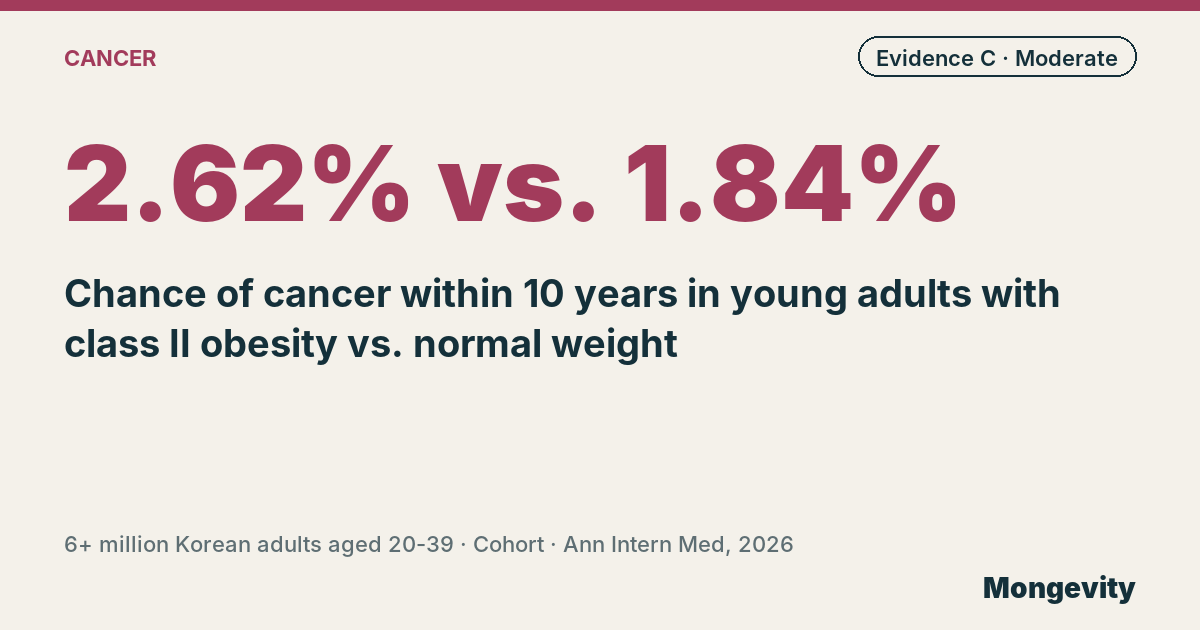
Class II obesity was linked to a 10-year cancer incidence of 2.62% vs. 1.84% with normal weight in a nationwide study of more than 6 million Korean adults aged 20 to 39, published Oct. 27, 2026, in Annals of Internal Medicine. Belly fat added to the risk of cancer in younger adults.
Cancer in people under 50 has been rising in many countries, and so has obesity in young adults.
Among more than 6 million Korean adults aged 20 to 39, those with obesity had a higher chance of being diagnosed with cancer over the next decade, and carrying fat around the belly made the difference larger.
What did the study look at?
Researchers used Korea’s national health insurance database from 2009 to 2021. They grouped young adults without cancer into five categories of body mass index, using criteria adapted to Asian populations, and followed them for a mean of 11.2 years.
What did the study find about cancer in younger adults?
The absolute difference compared with normal weight was 0.40% for class I and 0.78% for class II obesity. The link was relatively stronger in men, while the absolute differences were larger in women. Thyroid, endometrial and ovarian cancers had the highest incidence. Obesity was not linked to more breast cancer diagnosed by age 50.
Why does this matter?
Most cancer prevention advice targets older adults. This study suggests weight and waist size in early adulthood also matter, and that waist circumference adds information beyond body mass index alone.
How solid is this evidence?
It’s moderate. Mongevity rates it C on our A-to-E scale. The study is huge and long, but it’s observational: it shows an association, not that obesity causes these cancers. Participants were people who took part in screening, who may differ from the general population, and smoking and other factors weren’t fully measured.
What does this mean for you?
The absolute risks are small for any one person, but they add up across a population. Keeping a healthy weight and waist size in early adulthood is one more reason to stay active and eat well. Ask your doctor about any recommended screening if you have symptoms or a family history.
How do I explain this at dinner?
Scientists followed millions of young adults in Korea for about ten years. Those carrying a lot of extra weight, especially around the belly, were a little more likely to get cancer early. A good question for the table: what healthy habit would be easiest for our family to start now?
In one sentence: in young Korean adults, obesity, especially around the belly, was linked to a higher risk of early-onset cancer over the following decade.
Questions and answers
- Does obesity cause cancer in young adults?
- This study shows an association, not cause: 10-year cancer incidence was 2.62% with class II obesity vs. 1.84% with normal weight.
- Does belly fat matter?
- Yes, in this study: people with class I obesity and abdominal obesity had a higher incidence (2.45%) than those without it (2.13%).
- Which cancers were most common?
- Thyroid, endometrial and ovarian cancers had the highest incidence.