A stimulant eased fatigue in people with blood cancers in a placebo-controlled trial
Life after cancerPart of a story we are following · 3 articles · See every update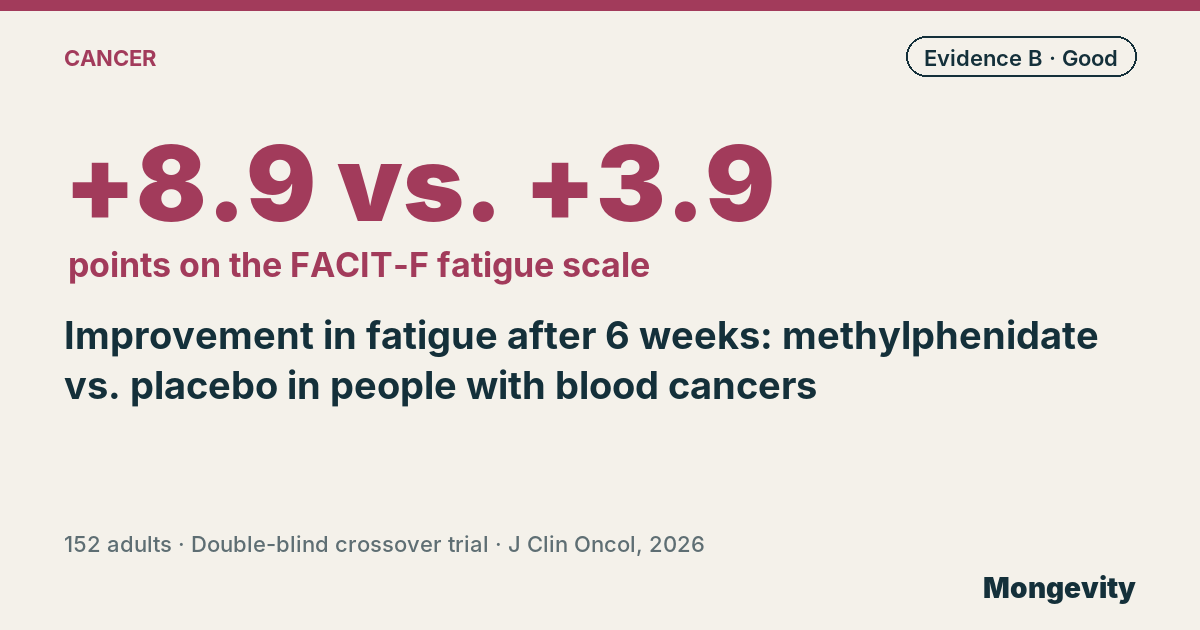
Methylphenidate improved a fatigue score by 8.9 points vs. 3.9 points with placebo in 152 adults with blood cancers, in a double-blind crossover trial published Oct. 30, 2026, in Journal of Clinical Oncology. Side effects were mild but more frequent, and less fatigue can improve life after a cancer diagnosis.
For many people with blood cancers such as leukemia, lymphoma or myeloma, fatigue is the most frequent and severe problem that goes unaddressed. It can last long after treatment and doesn’t go away with rest.
It did: fatigue scores improved more with methylphenidate than with placebo.
What did the trial test?
152 adults with a blood cancer and significant fatigue took methylphenidate for 6 weeks and a placebo for 6 weeks, in random order, with a treatment-free week in between. Neither patients nor doctors knew which pill they were taking. People couldn’t have had chemotherapy in the previous 8 weeks or be taking other psychiatric drugs. Fatigue was measured with the FACIT-F questionnaire, where higher scores mean less fatigue.
What did the study find about life after cancer?
| Methylphenidate | 57% |
|---|---|
| Placebo | 40% |
The difference between the two was 5.0 points in favor of methylphenidate, and other fatigue measures pointed the same way. Side effects were mild. The median age was 59.0 years and 44% were women.
Why does this matter?
Cancer-related fatigue affects work, family life and mood, and there are few treatments with solid evidence. A cheap, well-known drug that helps could make a real difference for survivors of blood cancers.
How solid is this evidence?
It’s good. Mongevity rates it B on our A-to-E scale. The double-blind, placebo-controlled crossover design is strong, since each person serves as their own comparison. Limits: each treatment period lasted only 6 weeks, people who had recent chemotherapy were excluded, and stimulants can cause problems like insomnia, higher heart rate or misuse, which need monitoring.
What does this mean for you?
If you or someone close to you has a blood cancer and lives with persistent fatigue, tell the oncology team: it’s a real symptom that can be treated. Methylphenidate needs a prescription and medical follow-up; don’t take someone else’s.
How do I explain this at dinner?
Some people who had blood cancer feel tired all the time, even after sleeping. Doctors tested a medicine that gives the brain a push, and many people felt less tired than with a fake pill. A good question for the table: how can we tell if someone is very tired and needs help?
In one sentence: methylphenidate eased fatigue more than placebo in adults with blood cancers, with mild but more frequent side effects.
Questions and answers
- Does methylphenidate help cancer fatigue?
- In this trial of blood cancer patients, fatigue scores improved 8.9 points with methylphenidate vs. 3.9 with placebo.
- What side effects did it cause?
- They were mild, but more frequent: reported in 57% of methylphenidate periods vs. 40% of placebo periods.
- Can I take it on my own?
- No. It's a prescription stimulant that needs medical follow-up.