An immunotherapy shot into the tumor cleared some early skin cancers in a small study
Skin cancer without surgeryPart of a story we are following · 1 article · See every update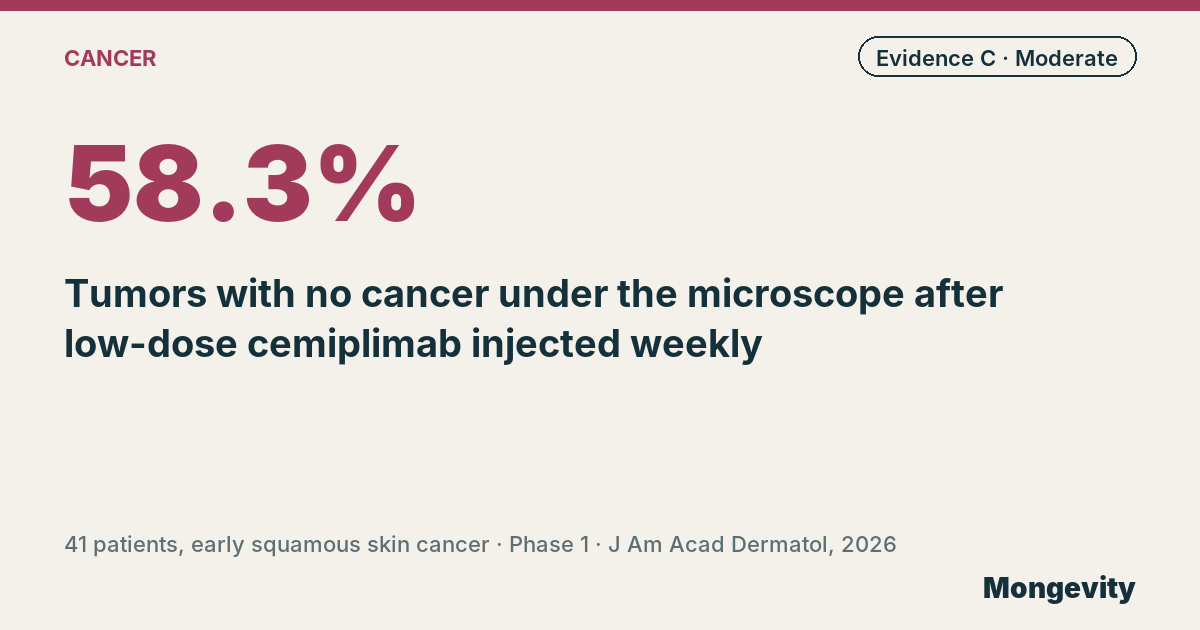
Low-dose cemiplimab injected into early squamous cell skin cancers left no cancer under the microscope in 58.3% to 66.7% of tumors in the expansion groups, in a small phase 1 study published Oct. 30, 2026, in Journal of the American Academy of Dermatology. It could someday spare some patients skin cancer surgery.
Cutaneous squamous cell carcinoma is one of the most common skin cancers. Small, early tumors are usually removed with surgery, which works well but can leave scars, especially on the face, and isn’t ideal for everyone.
In the groups that got the dose researchers now favor, more than half of the tumors had no cancer left when examined under the microscope.
What is cemiplimab?
Cemiplimab is an immunotherapy that takes the brakes off the immune system so it can attack cancer cells. It’s usually given by IV for advanced skin cancer. Here it was injected straight into the lesion at much lower doses.
What did the study test?
In this open-label pilot study, 41 people with early squamous cell skin cancers between 1 and 2 cm across had one lesion injected. First the researchers tried weekly doses of 5, 15 and 44 mg for 12 weeks. Then two expansion groups received 5 mg either weekly or every two weeks for six weeks. Doctors looked at the lesion at weeks 7 and 13, and the tumor area was removed with surgery at week 13 to check it under the microscope.
What did the study find about skin cancer?
| Week 13 | 5 mg weekly | 5 mg every two weeks |
|---|---|---|
| No visible tumor | 58.3% | 41.7% |
| No cancer under the microscope | 58.3% | 66.7% |
In the expansion groups, all side effects related to treatment were mild or moderate (grade 2 or lower).
Why does this matter?
A treatment that clears small skin cancers without cutting could help people who are frail, take blood thinners, or have tumors in places where surgery is hard. It also fits a broader trend in cancer care: using immunotherapy earlier and in smaller doses, closer to where the tumor is.
How solid is this evidence?
It’s moderate. Mongevity rates it C on our A-to-E scale. This was a small phase 1 study whose main goal was safety, with no comparison group. The authors note the small number of patients and that the injections may have varied. Surgery is still needed at the end to confirm the result.
What does this mean for you?
For now, surgery remains the standard for early squamous cell skin cancer. If you have a skin lesion that is new, growing, scaly or bleeding, have a dermatologist look at it. If surgery would be hard in your case, you can ask whether non-surgical options or clinical trials exist.
How do I explain this at dinner?
Instead of cutting out a small skin cancer, doctors tried a shot of medicine right into it that wakes up the body’s defenses. In more than half of the treated spots, the cancer was gone. A good question for the table: why might it help to fight a problem right where it is?
In one sentence: a low-dose immunotherapy injected into early skin cancers cleared many of them in a small study, but surgery is still the standard until bigger trials confirm it.
Questions and answers
- Can squamous cell skin cancer be treated without surgery?
- Surgery is still the standard. In this small study, cemiplimab injected into early tumors cleared the cancer under the microscope in 58.3% to 66.7% of lesions in the expansion groups.
- Is it safe?
- In the expansion groups, side effects were all grade 2 or lower. The study was small, so rarer problems can't be ruled out.
- Is this treatment available?
- It's experimental. The authors call for further study of the 5 mg weekly dose.