Caring for a cat with kidney disease weighed heavily on nearly half of owners
Cats and kidney diseasePart of a story we are following · 3 articles · See every update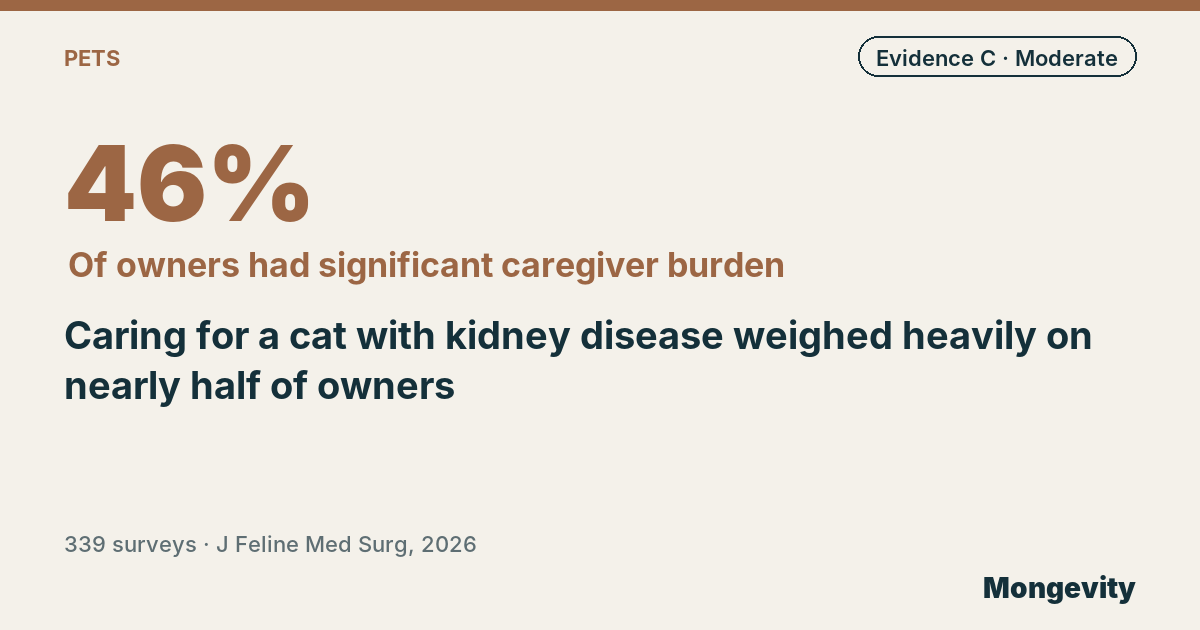
In a survey of 339 people caring for cats with chronic kidney disease, published Oct. 7, 2026, in Journal of Feline Medicine and Surgery, 46% had clinically significant caregiver burden, and feeling supported by the vet team was linked to lower burden. Kidney disease in cats weighs on owners too.
Chronic kidney disease is one of the most common illnesses in older cats. Managing it can mean special diets, medicines, fluids under the skin, frequent vet visits and coaxing a cat with a poor appetite to eat.
What did the study do?
Researchers recruited people with experience caring for a cat with kidney disease through social media for an anonymous online survey. They used an adapted version of the Zarit Burden Interview, a standard tool for caregivers of people, where a score of 18 or more means clinically significant burden. 339 surveys were completed.
What did the study find about kidney disease in cats?
46% of caregivers had a score of 18 or more. Burden was higher in some situations:
| Situation | Median burden score |
|---|---|
| Cat in advanced stages (IRIS 3 or 4) | 20.0 |
| Cat in earlier stages (IRIS 1 or 2) | 14.5 |
| Rarely or never sharing care with someone | 20.0 |
| Sometimes or always sharing care | 15.0 |
| Coaxing the cat to eat every day | 22.8 |
| Never coaxing | 14.5 |
| Always feeling supported by the vet team | 13 |
| Feeling supported only sometimes or never | 23 |
Why does this matter?
The well-being of the person caring for a sick pet affects the care the pet receives. Recognizing that nearly half of owners carry a significant load, and that support from the vet team is linked to a lighter one, can help clinics plan better follow-up.
How solid is this evidence?
It’s moderate. Mongevity rates it C on our A-to-E scale: a survey with a validated burden tool, but participants were recruited through social media and chose to take part, so they may not represent all owners. It shows links, not causes.
What are the open questions?
It would help to test whether specific supports, such as practical training for giving fluids, appetite plans or regular check-in calls, reduce owner burden and improve care.
What does this mean for you?
If you care for a cat with kidney disease, it’s normal to feel stretched. Ask your vet for a clear plan, help with techniques such as giving fluids, and options for appetite. Share the tasks with someone else when you can.
How do I explain this at dinner?
Taking care of a cat with kidney disease can be exhausting, and almost half of owners in a survey felt a heavy load. Those who shared the work or felt backed by their vet carried less. A good question for the table: who helps you when you’re caring for someone?
In one sentence: caring for a cat with chronic kidney disease caused significant burden for 46% of owners surveyed, and support from the vet team was linked to less.
Questions and answers
- How common is caregiver burden?
- 46% of owners in this survey had clinically significant burden.
- What made it worse?
- Advanced kidney disease, not sharing care and having to coax the cat to eat daily.
- What helped?
- Always feeling supported by the vet team was linked to lower burden scores.