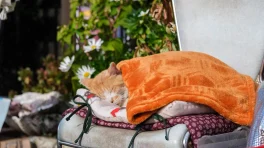
New hope for arthritis in pets: cats moved better after donor cell infusions
☕ Includes a question for the family ↓
Arthritis in dogs and catsPart of a story we are following · 2 articles · See every update
If your older cat has slowed down, here is something to feel good about. In a new trial on arthritis in pets, cats that got donor cell infusions were rated as doing better by their owners far more often than cats that got salt water.
The cells are called stromal cells, and they are known for calming inflammation. The results came from cats living in real homes, with arthritis they developed naturally. That makes this a hopeful step for the cat on your couch.
How the study worked
Researchers at six veterinary clinics enrolled 35 pet cats with osteoarthritis, the common wear-and-tear kind of arthritis. By chance, each cat got two injections into a vein, 14 days apart. The injections held either 5 million donor cells, 20 million donor cells, or salt water. Neither owners nor veterinarians knew who got what, and everyone checked in over 90 days. It was a small pilot study, published Sept. 4, 2026, in Frontiers in Veterinary Science, so the next step is bigger trials.
What they found
Owners picked the everyday things they wanted their cats to do again, like jumping or climbing. They also gave an overall rating. At day 90, owners called the treatment a success for about 78% of cats on the lower dose (7 of 9) and about 83% on the higher dose (10 of 12). In the salt water group, it was 36.4% (4 of 11).
Veterinarians saw a similar pattern. On their pain assessment, success reached 75% of cats on the lower dose and 83% on the higher dose. In the salt water group it was 45%. Vets’ overall ratings also favored the treated cats: 50% on the lower dose and 67% on the higher dose, versus 20% on salt water.
The researchers concluded that the cell infusions were well tolerated. They also said the cats improved at both doses for at least 3 months.
Some cats did have short-lived reactions. Side effects linked to treatment showed up in 10% of cats on the lower dose, 38% on the higher dose and 16.7% of cats on salt water. The most common ones in the first 24 hours were vomiting or nausea, weakness, tiredness, drooling, fast breathing and bad breath.
What are stromal cells?
Think of them as tiny helpers. They come from donor cats, here from uterine tissue, and they can calm inflammation in the body. Inflammation is a big part of what makes arthritis joints sore. The cells went in through a vein, so there was no need for injections into each sore joint.
Why arthritis in cats is easy to miss
Cats are experts at hiding pain. You may not see limping. Instead, you may notice your cat jumping less, grooming less or skipping the stairs. These small changes are worth noticing, because many cats can feel better with the right help.
What you can do today
You do not need to wait for new treatments to make your cat’s day easier. If your cat seems stiff, your veterinarian can talk through the options available now. Cell therapy is still being tested, so it is not something to ask your clinic to start next week.
Start with something simple. Watch your cat jump onto the couch or bed for a minute. If it hesitates, set a sturdy box, a stack of firm books or a small pet step next to its favorite spot. Make it low and steady so your cat can climb up with ease.
Talk about it at home
Some cats get sore joints as they get older. In this study, doctors gave some cats a drip of helpful cells and others a drip of salt water. Nobody knew who got which, so the results were fair.
Question for the table
Why do you think the scientists gave some cats salt water, and why did they keep it secret from the owners?
Keep exploring
Copies this article and its questions so you can paste them into ChatGPT, Claude, Gemini or the AI you use, and keep the conversation going.
Questions and answers
- What are stromal cells?
- They are cells that can calm inflammation. In this study they came from the uterine tissue of donor cats.
- Did the treatment help the cats?
- Yes. At day 90, owners rated treatment a success for 78% to 83% of treated cats, versus 36.4% on salt water.
- Were there side effects?
- Some cats had short-lived reactions in the first 24 hours, like vomiting, tiredness or drooling. They were more common at the higher dose.
- Can my cat get this treatment now?
- It is still being tested. Your veterinarian can tell you about the options available today.